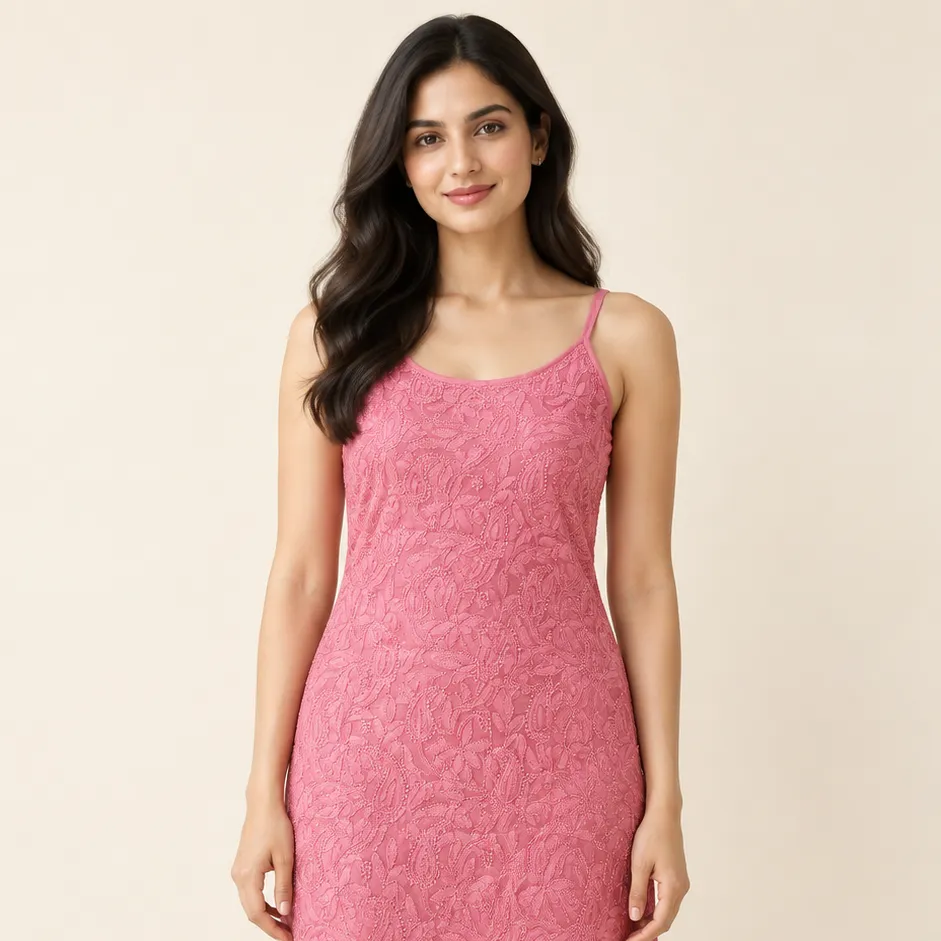
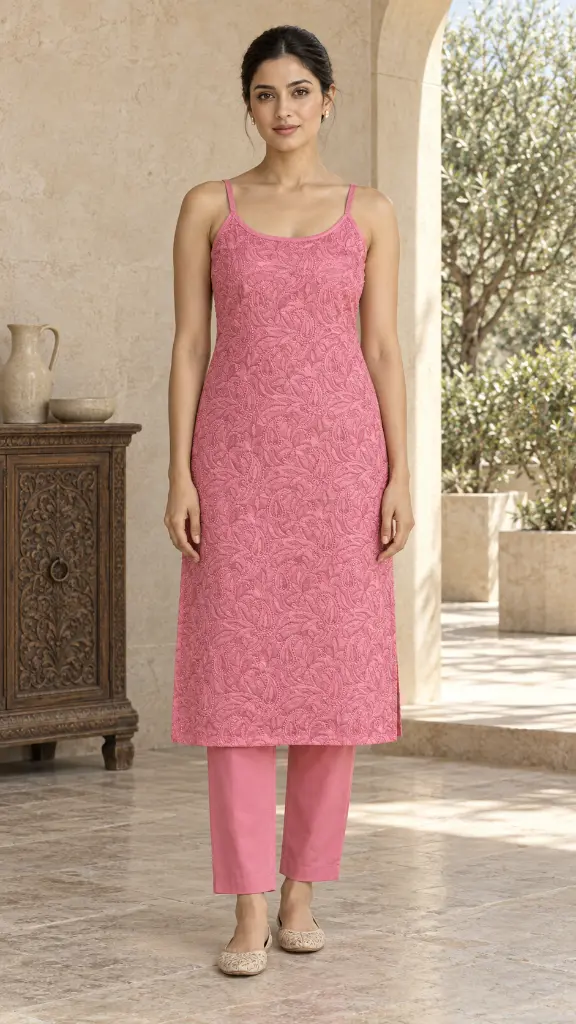
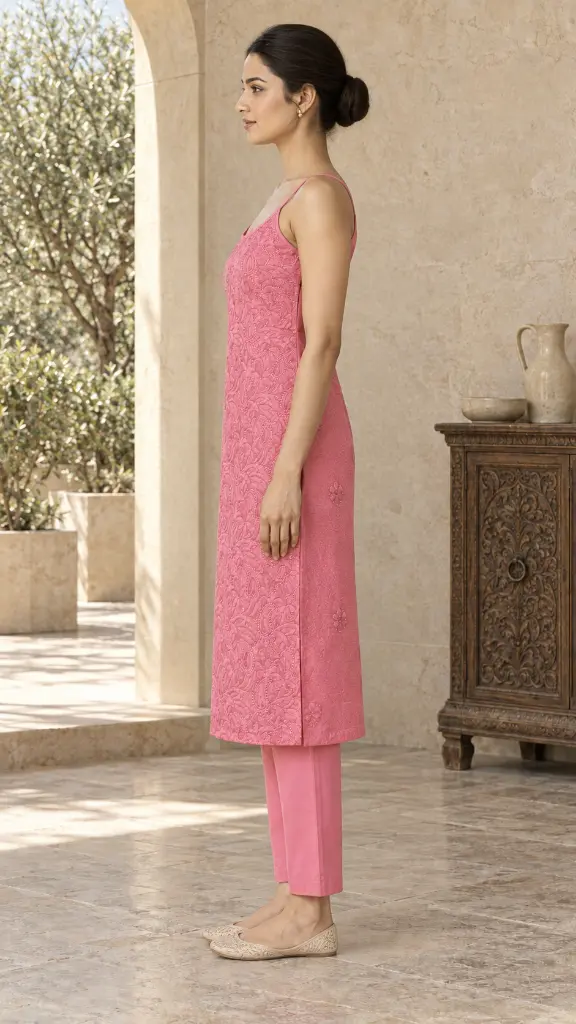
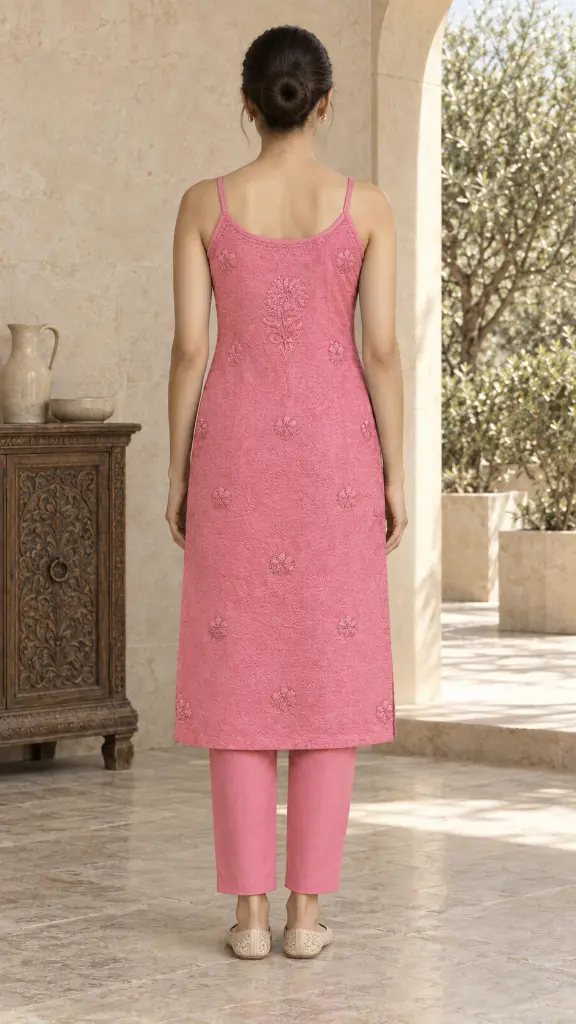
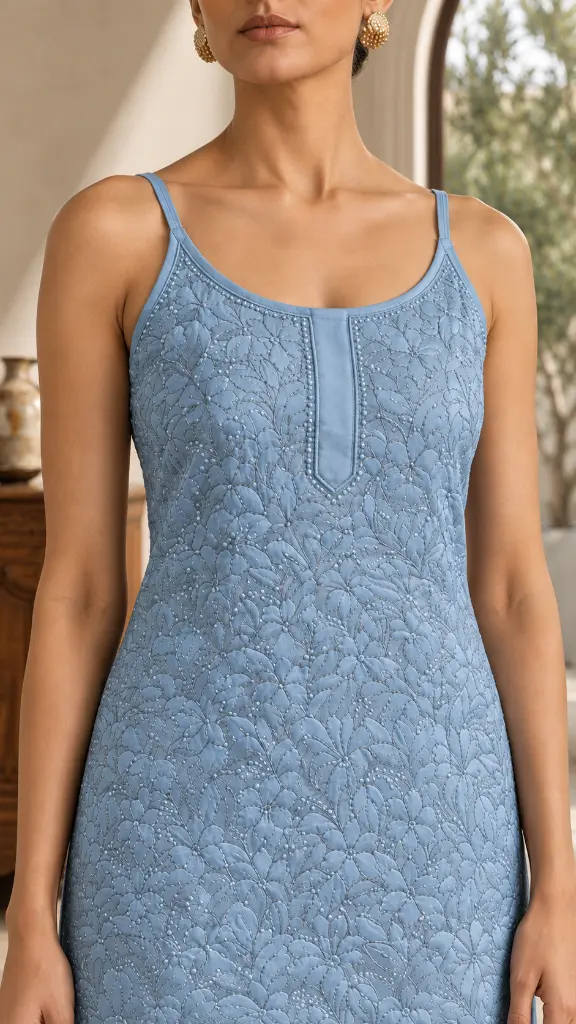
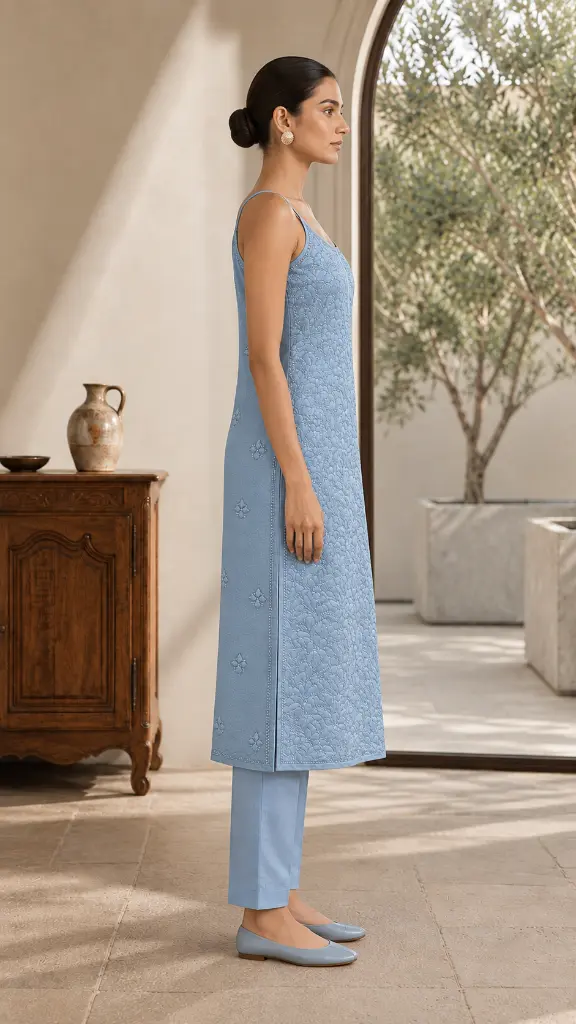
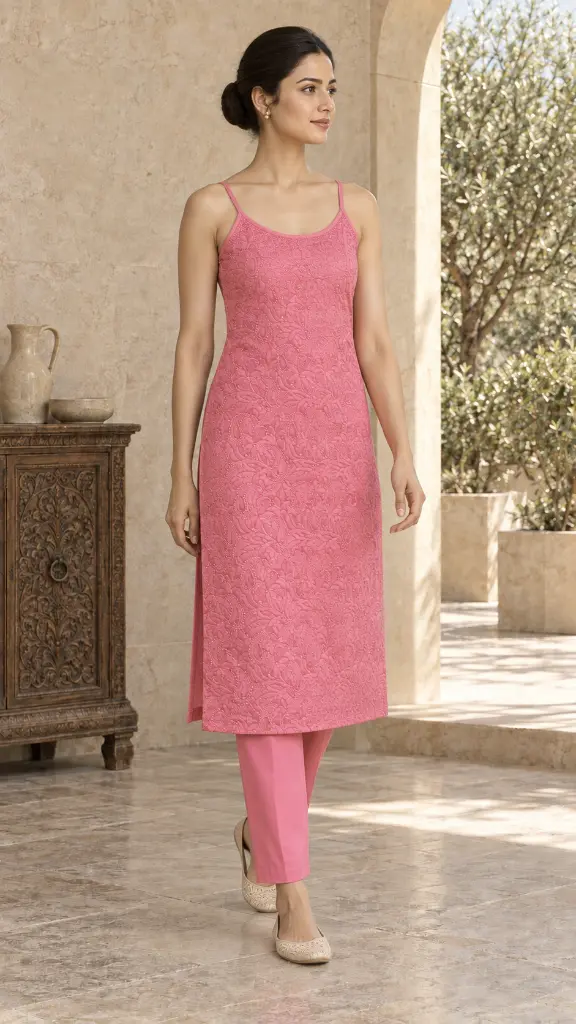
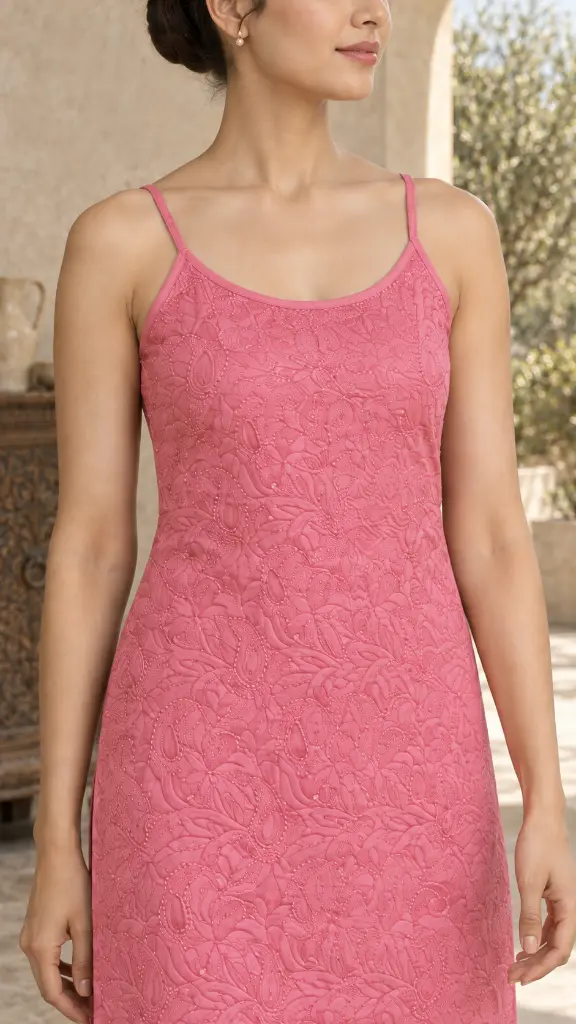
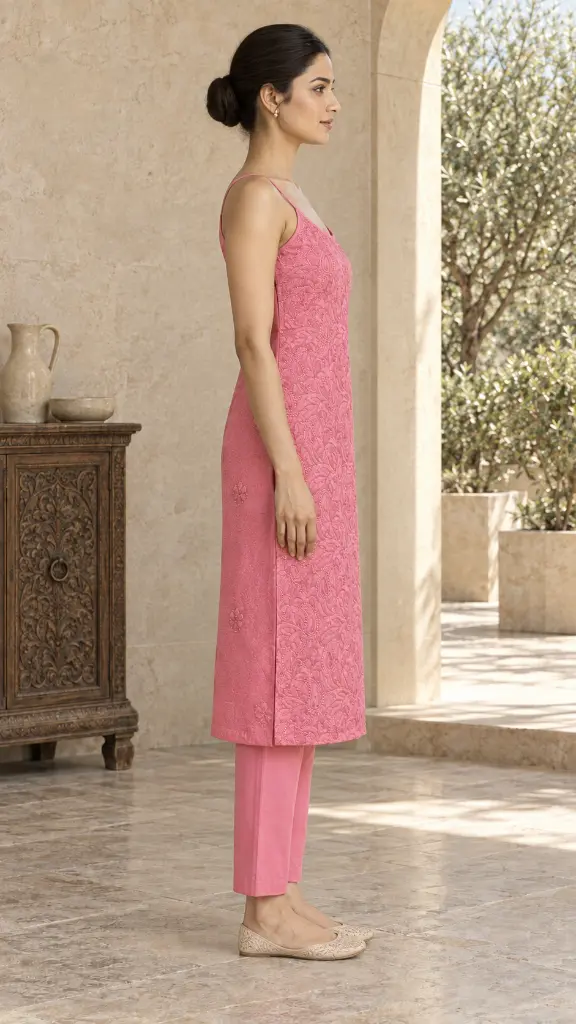
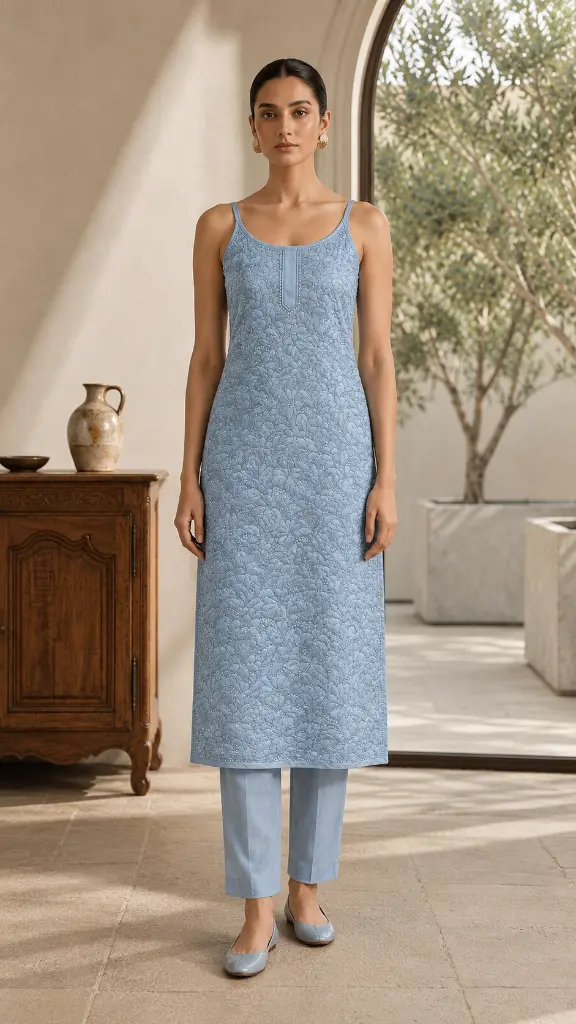
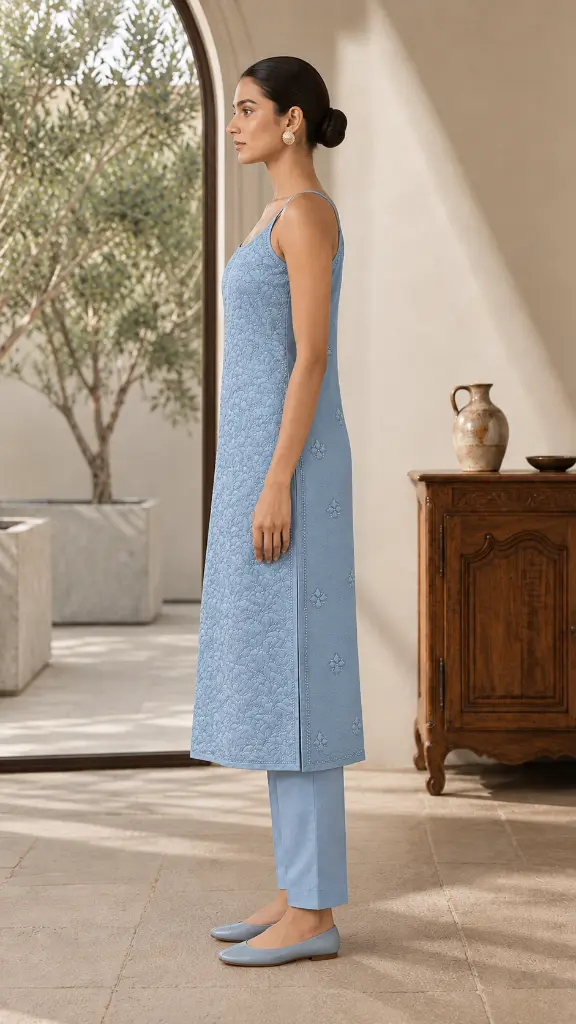
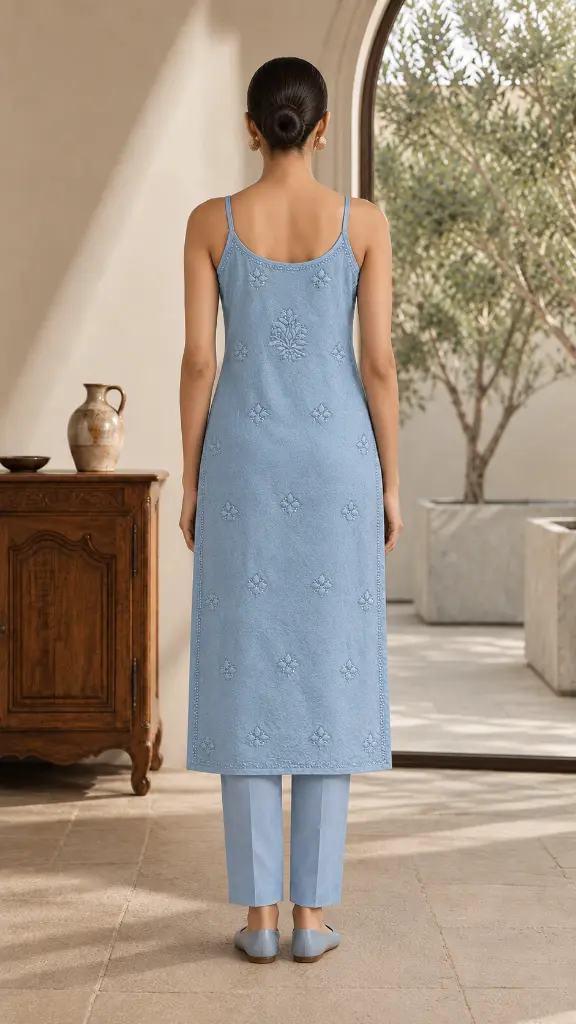
The embroidery on this kurti is worked in shadow work (saya), a Chikankari technique where the stitching is worked from the reverse of the fabric so the pattern shows through as a soft, diffused outline rather than sitting raised on the surface. Here it's worked at high density, covering the kurti almost entirely.
What's visible on this piece:
- Dense, allover leaf-and-floral shadow work covering the front of the kurti from the yoke down to the hem, giving the piece a rich, textured surface rather than an isolated motif or panel
- Pearl-toned bead detailing along the keyhole neckline, adding a small but deliberate point of shine against the tonal embroidery
- Beaded trim running the length of the side seams, echoing the neckline detail and giving the straight silhouette a finished edge
- A single floral medallion motif at the upper back, with smaller diamond-shaped motifs scattered below it — a different, more restrained treatment on the back panel compared to the density at the front
The combination of dense shadow work with bead detailing is a more elaborate treatment than shadow work alone — the beading gives the eye specific points of focus against the otherwise continuous tonal texture, which is worth calling out as a genuine point of craft difference from a plain shadow work piece.
Note: "hand-embroidered" is intentionally not used above, since that status needs confirmation from the product record. Shadow work is traditionally a hand technique, so if verified, it's worth stating clearly — Lunevi's approach is to under-claim until confirmed, not romanticise in the meantime.