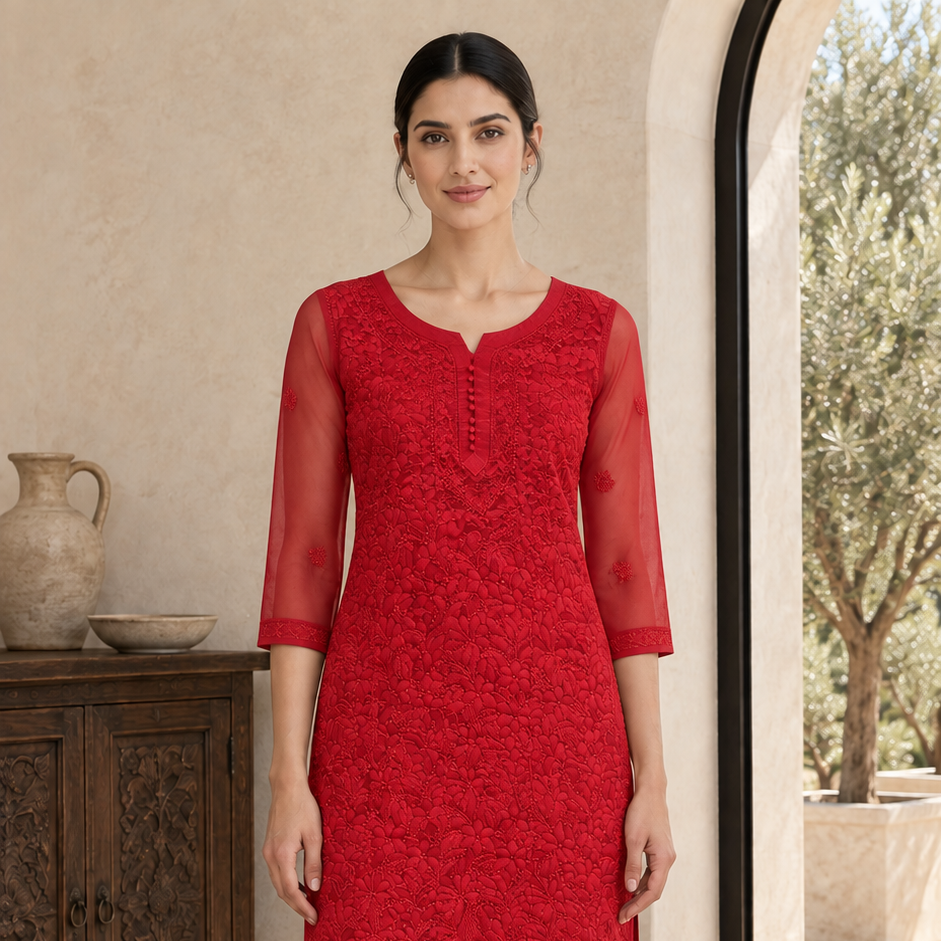
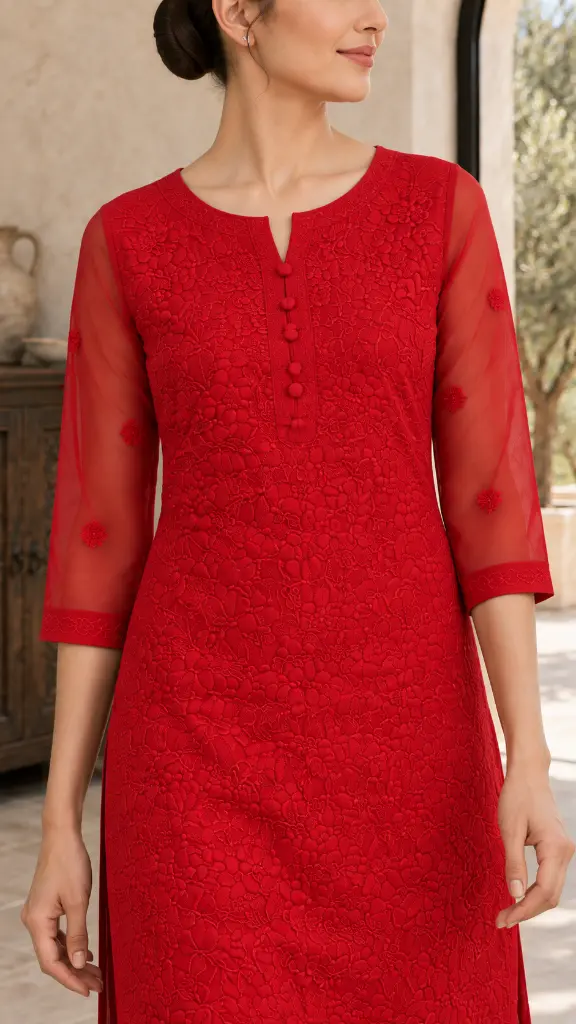
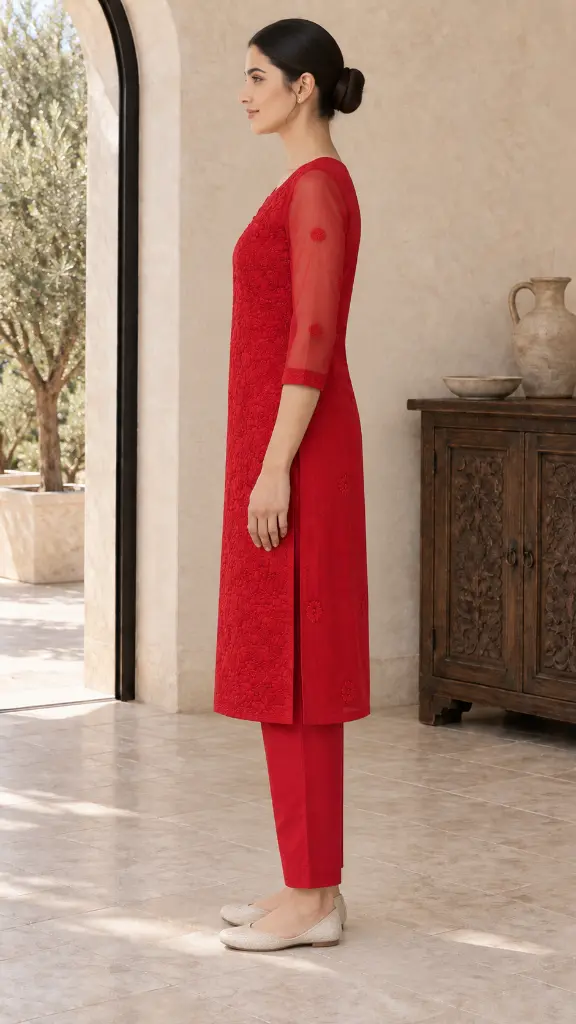
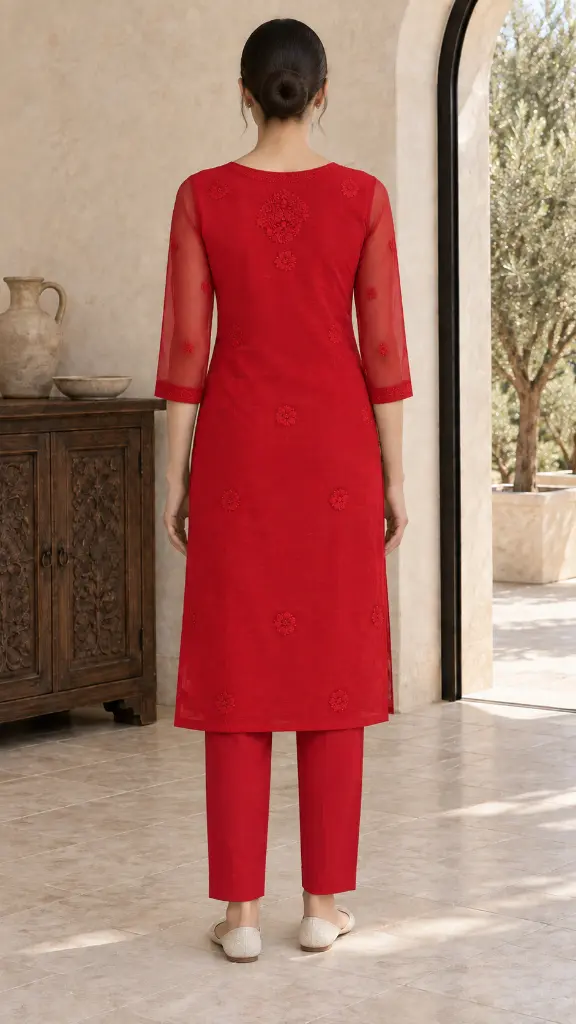
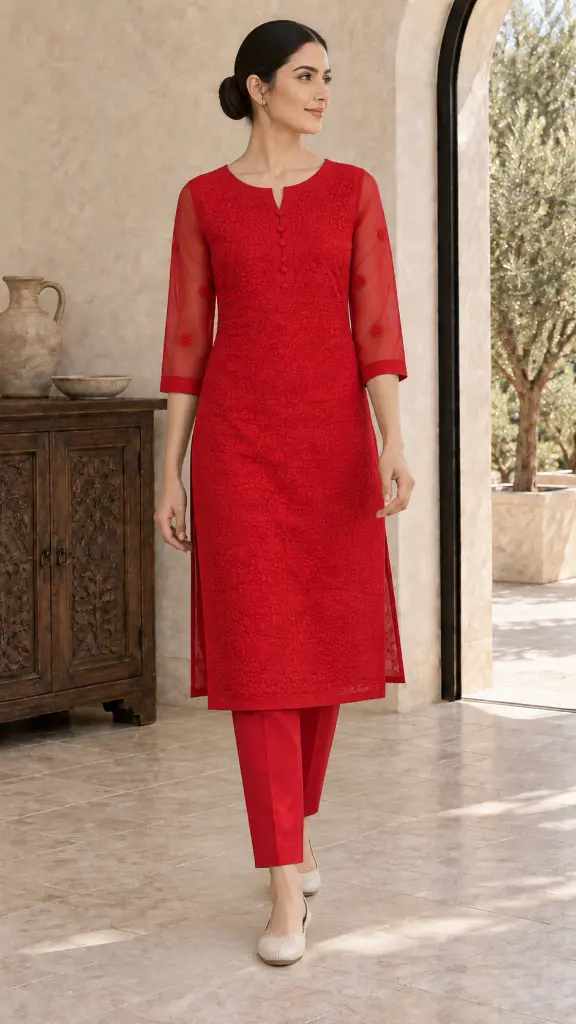
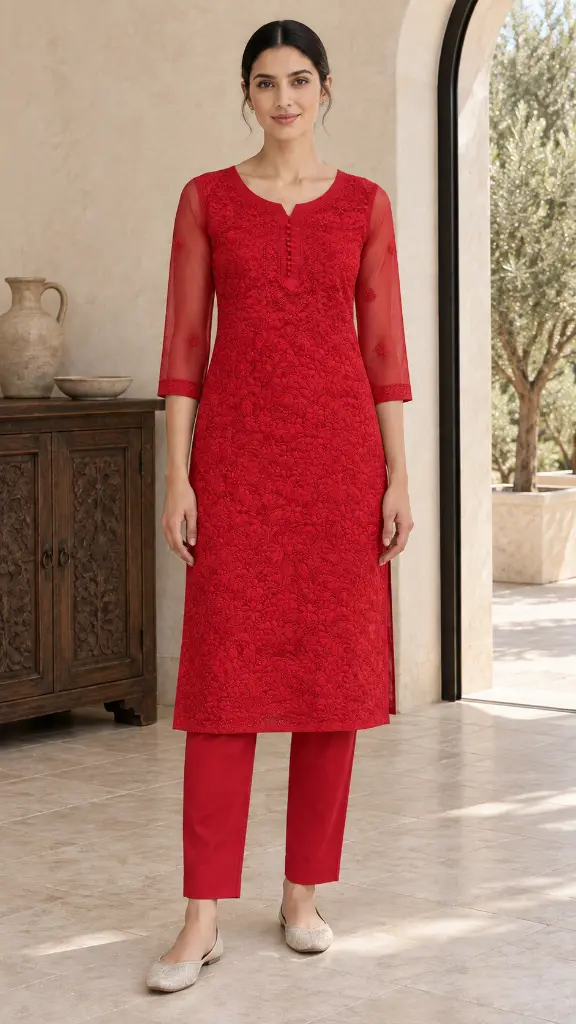
The embroidery on this kurti draws on Chikankari, the traditional embroidery style associated with Lucknow. This piece uses a denser, more raised floral treatment than the tonal shadow work seen elsewhere in Chikankari — worth confirming the precise stitch names (commonly phanda, murri, or tepchi are used to build this kind of layered floral density) with the product record before publishing, since naming the exact technique would strengthen this section considerably.
What's visible on this piece:
- Dense, overlapping floral embroidery covering the entire body of the kurti in tonal red thread, dense enough to read as an allover textured surface rather than individual motifs at a glance
- A more structured floral cluster at the yoke, closed with a row of small covered buttons at the keyhole neckline
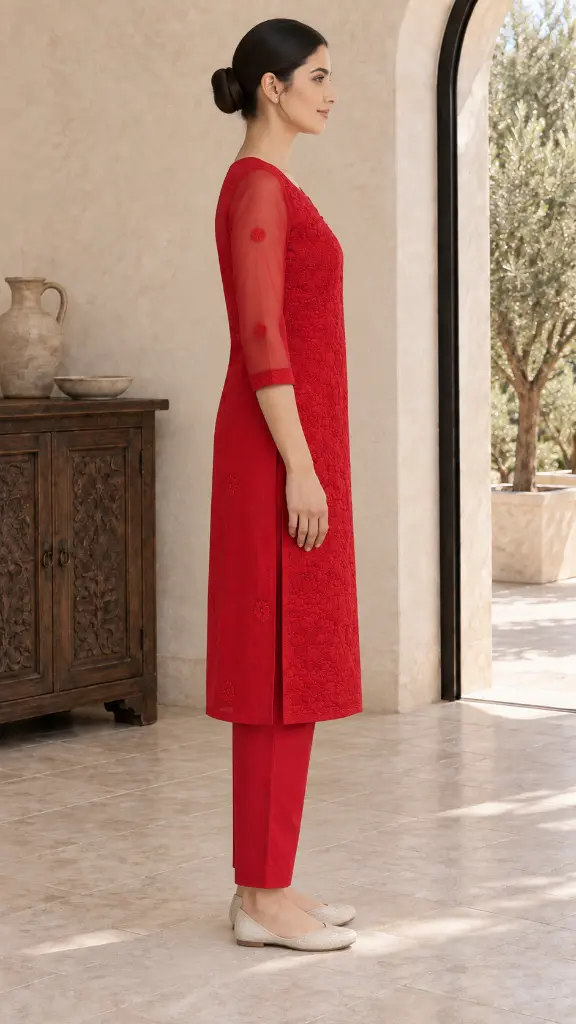
- Scattered individual floral motifs on the sheer sleeves, spaced apart against the sheer georgette rather than densely packed, with an embroidered border finishing the cuff
- Scattered floral motifs on the back, in a lighter, single-motif rhythm distinct from the density at the front
The contrast between the dense front/body treatment and the more open, scattered sleeve-and-back placement is worth highlighting specifically — it gives the kurti two distinct embroidery registers within a single tonal colour story.
Note: "hand-embroidered" is intentionally not used above, since that status needs confirmation from the product record. If verified, along with the specific stitch names used, this is worth stating clearly and specifically — Lunevi's approach is to under-claim until confirmed, not romanticise in the meantime.